Saint Benedict of Nursia
Feast day: July 11
Patriarch of Benedictine monks, father of Western monastic life, and author of the Benedictine Rule.
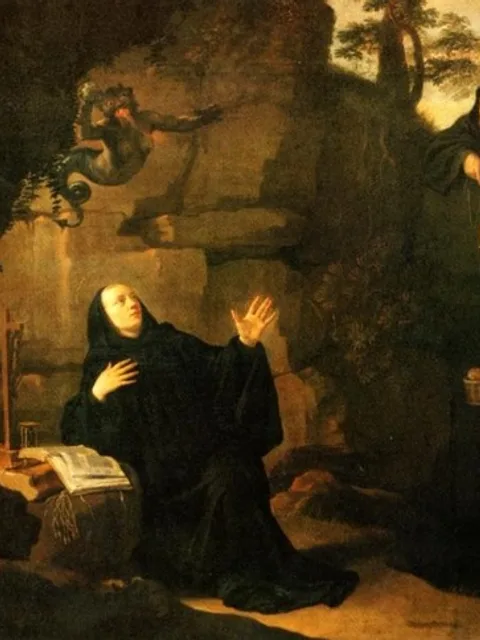
Benedict was born in Nursia, Italy, around 480 into a noble family. Sent to Rome for studies, he left the decadent city in search of God and lived as a hermit in a cave at Subiaco, where he faced temptations and deepened his life of prayer.
Disciples were drawn by his wisdom and asked him to guide them. He founded several monasteries and, at Monte Cassino, wrote the Rule that would guide Western monastic life for more than fifteen hundred years.
The Rule of St. Benedict balances liturgical prayer (Opus Dei), sacred reading, manual labor, and community life under an abbot's authority. Its motto Ora et labora — 'Pray and work' — sums up the dignity of work joined to contemplation.
Benedict died on March 21, 547, shortly after receiving a visit from his twin sister, St. Scholastica, also founder of a religious order. Tradition tells that both died within days of each other, united in life and death.
The Medal of St. Benedict, with its cross and Latin inscriptions of protection, is among the most widespread sacramentals in the Catholic world, used in homes, vehicles, and worn as a sign of faith and defense against evil.
St. Benedict is patron of Europe and of Benedictine monks. His liturgical feast is July 11. The Church celebrates him as spiritual father of a civilization shaped by prayer, study, and work.
Dedicated prayer
The prayer of the Medal of St. Benedict, asking protection against evil and the strength of Christ's Cross.
Read prayer →